
This month we are exploring the fifth permaculture principle: Use and Value Renewable Resources.
In permaculture, we aim to “close loops”, meaning utilizing resources in a way that reduces waste and limits the need for constant extraction of resources. This often looks like transforming organic materials from a garden or food forest into compost, mulch, or natural building inputs. But it also invites us to go a step further: to actively capture and use renewable flows that are already abundant around us. Sunlight, rainwater, wind, and biological cycles all offer opportunities to meet our needs while working in partnership with nature.
Using renewable resources not only reduces our carbon footprint, it builds resilience. When we rely less on finite, centralized systems and more on locally available energy and materials, our communities become more adaptable, self-sufficient, and connected to place.
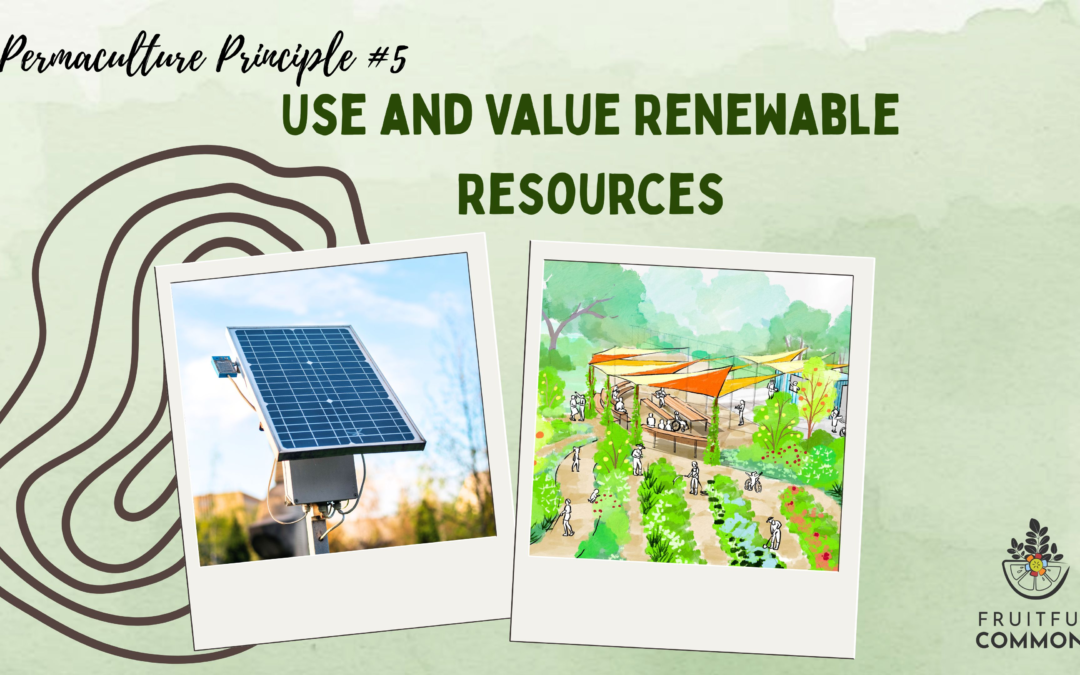
Deep Eddy Community Garden exemplifies this through using solar power in their garden! In 2023 they replaced their gas-powered equipment for electric mowers and other tools, shed ventilation, and a refrigerator. This has the added benefit of cutting the noise and harmful emissions caused by gas-powered tools. Theirs can provide power to get them through 2 to 3 cloudy days.
Earlier this year, when exploring Permaculture Principle #2, we highlighted how Festival Beach Food Forest captures rainwater through berms and swales by slowing, spreading, and sinking water into the land to nourish the ecosystem and reduce runoff. This month, we’re excited to share the next phase of that vision: not just catching water, but catching energy.
The Farah Rivera-Ortiz Cocina de Cosecha (Harvest Kitchen) is a solar-powered outdoor kitchen concept in development by Festival Beach Food Forest as part of its “Phase 2” project implementation. This space will serve as a hub where neighbors gather to cook, learn, and celebrate. From sun to supper, clean energy will be transformed into shared meals, hands-on skills, and community care.
The Farah Rivera-Ortiz Cocina de Cosecha (Harvest Kitchen) grew from many conversations around garden beds and picnic tables. The name represents the vision for the space as a center for building community over sharing the harvests from the gardens, and it centers Spanish in recognition of the Chicano community and heritage of the Festival Beach area. The project also honors the legacy and vision of Farah M. Rivera-Ortiz (1962–2022).
Farah Rivera-Ortiz was an award-winning Puerto Rican photojournalist, founder of the Serafina Pantry at the neighboring RBJ Senior Housing apartment complex, and a community leader with the Festival Beach Community Garden, RBJ Senior Housing, and East Cesar Chavez Neighborhood Committee. She received a posthumous Lifetime Achievement award from Emma S. Barrientos Mexican American Cultural Center in 2023.
Festival Beach Food Forest is in the process of securing permits, funding, and agreements with the Austin Parks & Recreation Department to move this project from vision to reality. If you are interested in supporting this project, please donate here!
Why Renewable Energy Matters
Renewable energy is a community asset! Solar power in particular offers a way to:
- Reduce long-term energy costs
- Lower environmental impact
- Power shared spaces that serve many people at once
- Increase energy independence and resilience
Making Renewable Energy More Accessible
We know that solar and other renewable systems can feel out of reach due to upfront costs. But there are growing pathways to make these solutions more accessible for community-led projects:
- Shared systems: Installing solar that serves a communal space (like a garden or kitchen) spreads the benefit across many users
- Phased implementation: Starting small (e.g., a single panel or battery system) and expanding over time
- Grants and partnerships: Collaborating with nonprofits, local governments, and mission-aligned businesses to fund installations
Whether it’s powering a small set of tools or a full outdoor kitchen, every step toward renewable energy helps cultivate a more resilient and regenerative future.
👉 Read the full blog series on our website to dive deeper into this principle, explore practical examples, and follow along as we unpack all 12 permaculture principles this year.

